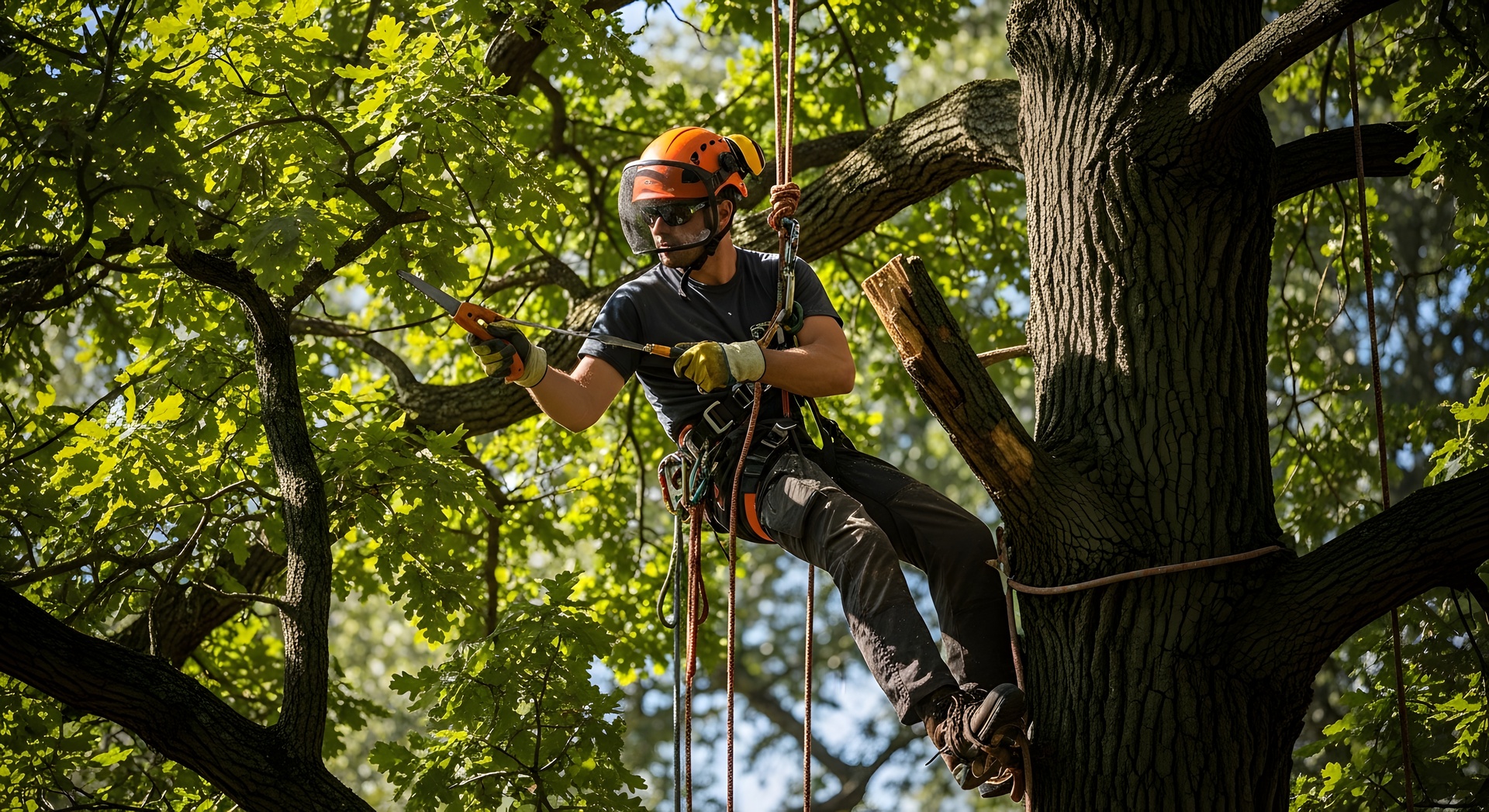
Tree surgery (professional arboriculture) involves all aspects of caring for and managing trees to keep them healthy, safe, and suitable for their environment. It includes everything from routine pruning and crown shaping to the complete removal of trees when necessary. Skilled tree surgeons use specialised tools and techniques to trim overgrown limbs, remove dead or diseased branches, and fell dangerous trees in a controlled manner.
The goal is to maintain the tree’s health and appearance while preventing hazards. This work is essential for both home and commercial property owners across the UK, helping preserve beautiful landscapes and ensure safety around buildings and public areas.
Common Tree Surgery Services:
-
Pruning and Crown Management: Selective trimming of branches (including crown reduction, thinning, and lifting) to improve a tree’s shape, allow more light, and remove weak or hazardous limbs. Proper pruning by a tree surgeon also promotes healthy regrowth and prevents disease spread.
-
Tree Felling and Removal: Safely cutting down and removing entire trees that are dead, diseased, or pose a hazard to nearby structures. Tree surgeons are trained to fell trees in sections if needed, using ropes and rigging to avoid damage on the ground. Complete removal is usually a last resort when other solutions (like bracing or pruning) won’t resolve the risk.
-
Stump and Root Removal: Grinding down tree stumps and removing major roots after a tree is felled. This prevents unwanted regrowth and clears the area for replanting or construction. Stump removal often requires specialised equipment (stump grinders) and may be an additional service, as not all tree felling automatically includes root removal.
-
Disease Treatment and Prevention: Identifying tree health issues (fungal infections, pests, decay) and taking action. For example, a tree surgeon might prune out branches infected by honey fungus or ash dieback to stop the spread. In severe cases, removing the afflicted tree can protect surrounding trees.
Lime Tree Surgery
Lime trees (common lime, Tilia species) are large deciduous trees that can grow over 30 metres tall. They are frequently seen along streets, in parks, or on older estates, and their size often necessitates regular tree surgery. Lime trees tend to produce many suckers (shoots from the base and trunk) that a tree surgeon will remove to keep the tree tidy.
Maintenance on a mature lime usually involves crown reduction or pollarding at intervals to manage its height and spread. This ensures the tree doesn’t overwhelm its space or block too much light. By pruning a lime tree’s canopy, a tree surgeon can also prevent heavy limbs from overhanging roofs or roads, reducing the risk of falling branches.
Beech Tree Surgery
Beech trees are majestic, broad-canopied deciduous trees common in the UK, known for their smooth grey bark and dense foliage. A mature beech can rival a lime in size, so tree surgery is often needed to maintain safety and shape. Tree surgeons may perform crown thinning on beech trees; carefully removing select branches to reduce weight and wind resistance in the canopy. This helps lessen the chance of large limbs breaking off during storms.
Any pruning of a beech must be done with care and expertise because beech trees do not respond well to extremely hard cuts. Heavy pruning or “topping” can leave a beech susceptible to decay and stress. Additionally, beeches are prone to certain fungi (like root and butt rot fungi) that can weaken the tree over time. An experienced arborist will inspect the base for signs of fungal decay and dead wood. Regular, light touch maintenance is key: by periodically removing dead or diseased branches and slightly reducing overcrowded areas, a tree surgeon keeps a beech tree healthy.
Ash Trees Surgery
Ash trees (such as the common ash, Fraxinus excelsior) are fast growing deciduous trees that often require significant attention due to their current health challenges. In recent years, the spread of ash dieback disease has severely affected ash populations across the UK. This fungal disease causes ash trees to decline, leading to dead branches and structural weakness.
Tree surgery for ash trees frequently involves removing dead or infected limbs to slow the disease’s spread and reduce hazards. Unfortunately, many ash trees that become heavily infected must eventually be felled for safety, as they can become brittle and prone to sudden collapse. A professional tree surgeon will assess an ash tree’s condition; if the tree poses a high risk (for example, large dead branches over a footpath or a dying ash near a building), the recommendation might be complete removal.
On healthier ash trees, normal pruning may be done to thin the canopy or lift it (remove lower limbs) if they are growing over roofs or roads. Ash trees can grow very tall and develop broad crowns, so managing their size is sometimes necessary on commercial properties (like in car parks or along property lines).
Safety is paramount with ash trees, especially diseased ones, so always consult a qualified tree surgeon.
Pear Tree Surgery
Pear trees can refer to fruit bearing pear trees (Pyrus communis) in an orchard or garden, as well as ornamental pear varieties often planted in landscapes. While pear trees are smaller than the giant shade trees above, they still benefit greatly from professional tree surgery. Fruit pear trees are usually pruned annually or bi-annually to maintain their structure and encourage a good crop of fruit.
A tree surgeon will know exactly when and how to prune a pear tree for maximum health; typically during the winter or very early spring while the tree is dormant, removing crossing branches and thinning out the crown. This improves sunlight penetration and air flow, which in turn boosts fruit quality and reduces disease.
Pear trees are somewhat prone to diseases such as fire blight and pear rust (a fungal disease causing orange spots on leaves). Careful pruning and removal of infected twigs can help manage these issues. In a damp UK climate, proper thinning of a pear tree’s canopy can prevent fungal problems by letting air circulate. Tree surgeons also make sure not to cut away too much at once; pears can respond poorly if over pruned, so balancing the tree’s shape with its ability to bear fruit is important.
On commercial properties, ornamental pear trees (often used along streets or plazas) might be pruned to keep a tidy form and to clear sightlines or signage.
Rowan Tree Surgery
Rowan trees (mountain ash, Sorbus aucuparia) are popular small ornamental trees, valued for their clusters of red-orange berries and attractive autumn foliage. They are relatively low maintenance as far as trees go, but occasional tree surgery can be required to keep a rowan in top shape. Rowan trees typically reach about 8–15 metres at maturity, so they usually don’t tower over buildings like oaks or beeches. This means they rarely need heavy crown reductions; instead, a tree surgeon’s work on a rowan will focus on light pruning and health checks.
It’s best to prune rowan trees during the dormant season (late autumn or winter) and to avoid cutting off the tree’s main leader or “topping” it. A qualified arborist will remove any dead, damaged, or crossing branches to open up the canopy slightly. This helps sunlight and air reach the centre, keeping the tree healthy and reducing the chance of fungal issues. Rowan trees can sometimes suffer from fire blight (the same bacterial disease that affects pears), which causes shoots to die back; if present, those should be pruned out and disposed of. With periodic care, rowans will continue to grace a property with minimal issues, making them a favourite for commercial landscapes and gardens alike.
Major leisure resort landscaping is not just about appearance. It affects visitor experience, safety, accessibility, long term maintenance costs, and environmental impact.
Projects like the Center Parcs Woburn Forest development show how important it is to get landscaping right, not just for opening day, but for years to come.
Frequently Asked Questions about Tree Surgery
Yes. In addition to cutting down trees, tree surgeons can also remove or grind out the remaining tree stump and roots if needed. Typically, after felling a tree, you can request stump removal services where the surgeon uses a stump grinding machine to chew the stump wood below ground level and destroy or remove the major roots.
Many homeowners opt for stump and root removal to prevent the tree from re-sprouting and to avoid leaving a tripping hazard or an obstacle to new planting. If roots are left in the ground, they will usually decay naturally over time, but this process can take many years.
The decision to cut down a nearby tree should be based on a careful assessment of its condition and risks. Ask yourself or a professional: Are the tree’s roots damaging the foundation or underground pipes? Is the trunk or large limbs dangerously close to walls or windows? Are branches overhanging the roof that could fall and cause damage?
In many cases, a tree surgeon can address these issues without removing the entire tree; for example, by pruning back overhanging branches or selectively cutting problem roots while leaving the tree standing. Modern building techniques and root barrier systems often mitigate root damage, and most tree roots grow more outward than downward, so they aren’t as likely to crack solid foundations as people fear. Unless the tree is unstable or causing serious structural problems, cutting it down might be unnecessary.
Yes, performing tree removals (felling trees) is one of the core services provided by tree surgeons. While the term “surgery” might make it sound like they only heal or prune trees, tree surgeons are fully trained to cut down trees safely when needed.
They will assess if a tree needs to be removed (for example, if it’s dead, infected beyond saving, or posing a danger). If so, a professional will use the proper techniques to fell it in a controlled way. Often this means cutting the tree down in sections, especially in tight spaces
Much like a doctor or surgeon diagnoses a patient, a tree surgeon must inspect a tree and diagnose issues, then decide on the best course of action to improve or save the tree. The actual work; whether it’s a precise pruning cut, the removal of a diseased limb, or treating a pest infestation is done with great care to ensure the tree’s well being and the safety of its surroundings.
If you would like to discuss a future project, you can get in touch directly via our contact page.
About Land Structure
With over 40 years of experience, Land Structure specialises in creating sustainable, functional landscapes for commercial, industrial, and public sector clients.
Our team brings technical skill and design vision to every project, ensuring every landscape delivers lasting value.
Contact us today to discuss your next development.

Get in touch with us
Submit an enquiry to us using the contact form found on this page. A member of our team will be in touch within 2 business days.
Alternatively, you can contact us directly using the information found below.
